



Winter Furnace Preparation Checklist & Safety Tips for Alvin, TX
Getting your furnace ready for winter means focusing on safety checks, basic maintenance, and a few efficiency upgrades that cut risks, lower heating bills, and keep your home comfortable when temperatures drop. This guide walks through what “preparing your furnace for winter” looks like, how seasonal checks reduce carbon monoxide risks and avoid costly breakdowns, and which tasks you can safely handle yourself vs. those that need a technician. You’ll get a step-by-step checklist, instructions to test thermostats and detectors, warning signs that need immediate attention, and upgrade options to improve comfort and energy use. Practical lists, simple troubleshooting steps, and comparison tables make everything easy to follow — plus we include short local guidance for getting professional help in Alvin, TX if you need it. Read on for safety-first prep, efficient habits, and targeted upgrades to keep your heating system dependable all season.
Why preparing your furnace for winter matters
Seasonal furnace prep lowers safety risks, improves heating performance, and helps your equipment last longer by catching avoidable problems early. A well-maintained furnace runs cleaner and with less strain, which cuts fuel use and reduces the chance of sudden failures during cold snaps. Proper prep also addresses combustion safety — reducing the risk of carbon monoxide exposure — and promotes more even heating so everyone stays comfortable. Regular maintenance can also protect warranty coverage and lets homeowners budget for service instead of facing surprise repairs.
With those benefits in mind, start with safety checks, then move to efficiency and comfort tasks.
What safety benefits come from winter furnace preparation?
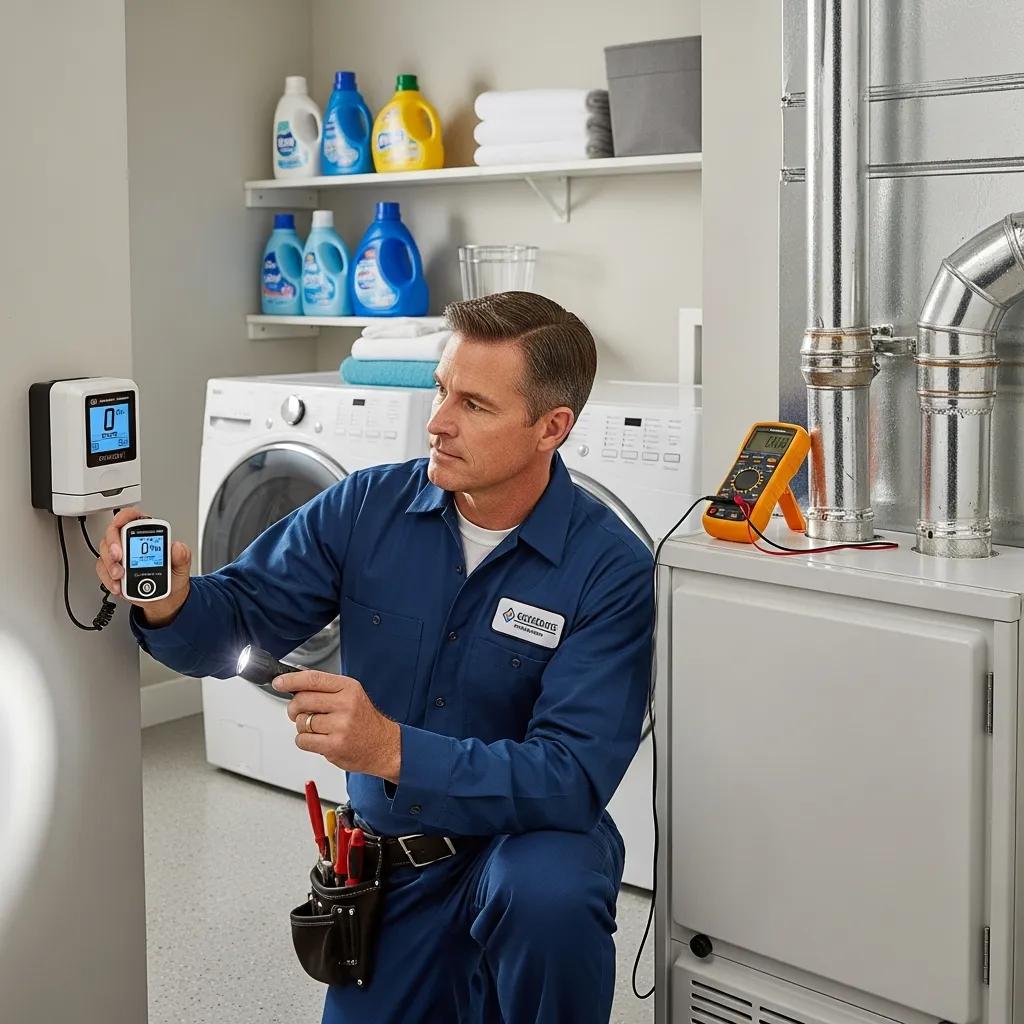
Safety-first prep begins with testing carbon monoxide detectors, clearing vents and flues, and watching for combustion issues that could signal dangerous leaks. Regularly checking detectors and batteries, plus a quick look at outdoor vent terminations, reduces the chance of backdrafting and CO buildup inside your home. A visual check of the heat exchanger for obvious cracks or soot — and calling a pro if you see anything suspicious — helps prevent hidden combustion leaks that can be life-threatening. These steps protect people and cut down on emergency repairs caused by neglected combustion components.
Preventing carbon monoxide deaths with detectors
ABSTRACT: Unintentional carbon monoxide (CO) poisoning is responsible for roughly 2,100 deaths in the U.S. each year, yet CO detectors can prevent many of these fatalities. A study of CO deaths in New Mexico (1980–1995) reviewed 136 cases investigated by the state medical examiner. Of those deaths classified as unintentional CO poisoning, many victims were asleep when poisoned — highlighting how vital functioning detectors are for residential safety. Proper detector placement and regular testing significantly reduce the risk of unnoticed CO exposure.
Beyond safety, routine mechanical upkeep also creates tangible efficiency and longevity gains that save money over time.
How proper furnace maintenance boosts efficiency and lifespan
Keeping filters, blowers, and heat exchangers clean reduces friction and heat loss, which shortens run times and lowers energy bills. A clean filter and a well-tuned blower let the furnace move warm air more effectively, so the system reaches set temperatures with fewer cycles — reducing wear on ignitors and motors and extending equipment life. Seasonal checks also catch small problems, like loose belts, minor gas pressure drift, or thermostat calibration issues, before they become bigger failures. Over time these preventive steps add up to noticeable efficiency gains and far fewer midwinter emergencies.
Those efficiency benefits lead directly to a clear, hands-on checklist you can follow before heating season starts.
The complete furnace winter checklist for homeowners
This checklist lays out practical DIY actions and the professional tasks you should schedule. Each step explains what to do, why it matters, and simple signs that it’s time to call a technician. Start with safety items, then focus on airflow and comfort.
- Test carbon monoxide detectors and replace batteries: Make sure detectors respond to the test button and check manufacture/expiration dates.
- Replace or inspect air filters: Change disposable filters or clean reusable ones; clogged filters restrict airflow and stress the system.
- Inspect vents, returns, and outdoor intake: Clear furniture, curtains, and outdoor debris to keep combustion and airflow paths open.
- Test thermostat operation and programming: Confirm temperature accuracy and set an efficient schedule.
- Listen for unusual noises and watch for short-cycling: New or loud sounds, or rapid on/off cycles, point to mechanical or control issues.
- Schedule a professional combustion and safety inspection for gas furnaces: Have a licensed technician inspect the heat exchanger, burners, and venting.
Summary: Put safety and airflow first, then tune thermostat and system behavior. If you’re unsure about combustion or more complex diagnostics, call a pro.
Quick reference: the table below shows how often to do each task and whether it’s usually DIY or professional work.
| Task | Recommended Frequency | Recommended Action |
|---|---|---|
| Carbon monoxide detector test | Monthly (batteries annually) | DIY test; replace detector per manufacturer; call a pro if the alarm ever sounds |
| Air filter replacement/inspection | Every 1–3 months | DIY replacement; pro service for hard-to-reach or specialty filters |
| Vent and flue clearance | At start of season and as needed | Clear obvious debris yourself; get a pro if you suspect drafting issues |
| Thermostat calibration/programming | Annually or when faults appear | DIY recalibration; technician for wiring or control problems |
| Combustion/safety inspection | Annually before heating season | Professional inspection recommended |
Use this table to plan routine DIY checks and identify recurring professional services that protect safety and efficiency.
How and when to change your furnace filter
Using the right filter and changing it on schedule reduces dust, protects airflow, and preserves furnace efficiency. Pick a filter that fits your return grille and a MERV rating that suits your household — higher MERV traps finer particles but can restrict airflow if the system isn’t designed for it. Replace disposable fiberglass or pleated filters every 1–3 months depending on pets, indoor air quality, and usage; check monthly during heavy-use periods and swap sooner if the filter looks dirty. Follow manufacturer instructions: power down the unit, note airflow direction on the filter frame, and install the new filter securely.
Regular filter changes ease motor strain and improve comfort. If replacing filters doesn’t fix pressure or airflow problems, a technician should check the blower and ducts.
How to test and adjust your thermostat for winter efficiency
Start by comparing the thermostat reading to a reliable room thermometer and call for heat briefly to confirm the furnace responds. Replace batteries if needed, set conservative setpoints that balance comfort and savings, and use setback schedules for sleep or away times. Smart thermostats add geofencing, adaptive learning, and remote control to cut wasted runtime — enable features that reduce overshoot and preheat only when necessary. If the thermostat consistently lags or the system short-cycles, have a technician inspect wiring, control signals, and compatibility with smart controls.
Tweaking thermostat settings often produces immediate runtime reductions and steadier indoor temperatures.
Steps to ensure proper vent and airflow clearance
Check every supply register and return for blockages and make sure outdoor combustion vents and exhausts are clear of debris and vegetation. Walk each room, move furniture or rugs that block registers, and vacuum return grills to knock down dust. Outside, keep 2–3 feet clear around intake and exhaust terminations to prevent leaves, nests, or yard debris from limiting airflow. Visually inspect accessible ductwork for obvious gaps or loose connections; sealing or insulating ducts in unheated spaces improves delivery and reduces energy loss.
Good airflow improves comfort and reduces overheating or short-cycling. If airflow problems persist, call a pro for duct or blower diagnostics.
DIY vs pro: the table below shows which checklist items are typically homeowner tasks and which usually need a technician.
| Checklist Item | Frequency | DIY vs Professional |
|---|---|---|
| Filter replacement | 1–3 months | DIY |
| Thermostat programming | Annually | DIY (or pro for smart installs) |
| Vent and register clearing | Start of season / as needed | DIY |
| Heat exchanger inspection | Annually | Professional |
| Burner/combustion adjustment | Annually | Professional |
Use this comparison to keep safe DIY checks at the top of your list and leave combustion and complex diagnostics to trained technicians to protect safety and warranties.
Common furnace issues to watch for during winter
Typical winter furnace problems show up as symptoms homeowners can spot: reduced airflow, odd mechanical noises, short cycling, uneven temperatures, or unexpectedly higher heating bills. These often come from clogged filters, failing blower motors, ignitor or ignition faults, or a cracked heat exchanger in combustion systems. Many issues resolve with early troubleshooting, but burning smells, CO alarms, or sudden total loss of heat are emergencies that need immediate professional attention. Knowing common symptom-to-cause patterns helps you act quickly and safely.
Here’s a short diagnostic list mapping symptoms to likely causes and what to try first.
- Reduced airflow and dust buildup: Often a dirty filter or duct blockage — check and replace filters; clear registers.
- Loud humming, grinding, or squealing: Could be a failing blower motor or loose parts — shut the system off and call a technician.
- Short cycling (rapid on/off): May indicate an oversized unit, thermostat issue, or airflow restriction — try a fresh filter, then call a pro if it continues.
- Uneven heating or cold spots: Could be duct leaks or poor airflow balance — inspect registers and consider duct sealing diagnostics.
Summary: Start with safe DIY checks and escalate to professional diagnostics for mechanical noises, persistent faults, or safety alarms.
How to spot a faulty filter or blower motor
A clogged filter usually shows up as reduced airflow, visible dust at vents, and longer run times as the furnace strains to hit setpoints. Check filters monthly during heavy use and replace them if dark or stiff. If airflow problems persist after replacing the filter, the blower or ducts may be the issue. Blower motor problems include unusual startup noises, weak airflow even with a clean filter, or intermittent operation — signs of lubrication, electrical, or motor failure. If you suspect the blower, shut the system down and call a pro to avoid motor burnout and protect the control board.
Catch these signs early to avoid bigger failures and know when a repair becomes an emergency.
When emergency furnace repair is necessary
Call for emergency repair when there’s immediate safety risk or loss of essential heat in extreme cold — for example, CO alarm activation, fainting or illness tied to CO exposure, persistent combustion smells, visible flame problems, or complete heating loss during dangerously low temperatures. If CO is suspected, shut off the furnace if it’s safe, get everyone to fresh air, and call emergency services before contacting an HVAC technician. For urgent but non-life-threatening failures — like no heat during a severe cold snap — request emergency service to restore heat and avoid frozen pipes or unsafe indoors temperatures.
Understanding emergency triggers helps you act decisively to protect people and property.
How upgrading your furnace and thermostat improves winter comfort
Upgrading to a higher-efficiency furnace or adding a smart thermostat improves comfort by delivering more heat per unit of fuel and cutting wasted runtime through smarter controls. Higher AFUE furnaces convert more fuel to usable heat and often include variable-speed blowers or condensing tech that capture extra heat from exhaust. The result: lower fuel costs, quieter operation, and steadier temperatures. Smart thermostats and zoning controls reduce unnecessary runtime by matching heating to occupancy and habits, focusing comfort where it’s needed. If your system is old, frequently repaired, or inefficient, replacing it and adding smart controls can meaningfully improve comfort and predictable energy use.
The sections below outline high-efficiency furnace benefits and how smart thermostats boost winter performance, plus a comparison table to help evaluate upgrade options.
Advantages of high-efficiency furnaces
High-efficiency furnaces (measured by AFUE) deliver more heat from the same fuel and often include variable-speed blowers and condensing designs that reclaim heat from exhaust gases. Practical benefits include lower annual fuel costs, quieter, more even heating through better modulation, and reduced emissions per heat unit delivered. When a furnace is near the end of its service life or has repeated failures, upgrading can be a smarter long-term investment than ongoing repairs.
Pairing a higher-AFUE furnace with smarter controls maximizes runtime efficiency and comfort.
Upgrade comparison: the table below shows common options, characteristics, and typical benefits.
| Upgrade Option | Characteristic | Typical Benefit/Metric |
|---|---|---|
| Standard efficiency furnace | AFUE ~78–85% | Reliable heating; moderate fuel costs |
| High-efficiency furnace | AFUE >90% | Lower fuel costs; improved comfort |
| Smart thermostat | Scheduling, learning, remote access | 8–15% potential heating energy savings |
| Zoning controls | Multiple thermostats, dampers | Targeted comfort; reduced wasted heating |
Summary: Replacing an old furnace with a high-AFUE model and adding smart controls usually delivers the biggest gains in comfort and efficiency for winter.
How smart thermostats help winter heating efficiency
Smart thermostats cut wasted runtime with adaptive schedules, geofencing, and learning features that align heating to real occupancy and routines. Remote control lets you preheat only when needed, and weather-aware adjustments prevent overshoot on cold mornings. Many units also provide energy reports to help you spot further saving opportunities. For multi-zone homes, smart controls plus dampers can improve comfort in specific rooms without heating the whole house, lowering overall fuel use.
Smart controls often reduce winter energy use while improving comfort — a practical complement to furnace upgrades.
Frequently Asked Questions
What should I do if my furnace is making strange noises?
If your furnace starts making grinding, squealing, or banging noises, it likely points to a mechanical issue — for example a failing blower motor, loose hardware, or an ignition problem. Turn off the furnace to avoid further damage and schedule a professional inspection. Don’t ignore these sounds: addressing them quickly prevents bigger failures and higher repair bills.
How can I improve my furnace's energy efficiency?
To boost efficiency: change filters regularly, get annual tune-ups, seal ductwork, and improve home insulation. Upgrading to a high-efficiency furnace or installing a smart thermostat also reduces energy use. Together, these steps improve comfort and produce long-term savings on heating costs.
What are the signs that my furnace needs to be replaced?
Consider replacement if your furnace is over 15 years old, needs frequent repairs, or your energy bills keep rising. Other warning signs include uneven heating, persistent strange noises, or a yellow burner flame on gas units. A professional assessment will help you decide whether repair or replacement is the better option.
Conclusion
Preparing your furnace for winter protects your family, saves energy, and reduces the chance of costly midseason repairs. Follow the checklist, keep detectors and filters up to date, and schedule a professional inspection if you have combustion concerns or persistent issues. Don’t wait for cold weather — take action now to keep your home safe and comfortable this winter. Contact Davis Mechanical Contractors to book a tune-up and get your system ready for the season.